 Safari in Tanzania & Zanzibar
Home › Guides › When Is the Great Migration in Tanzania? Safari Months and Where to Go
When Is the Great Migration in Tanzania? Safari Months and Where to Go
The great migration Tanzania offers is a year-round circle, with calving on the Ndutu plains from late December to April and Mara River crossings in the north in the dry months. This guide shows where the herds are by month and how to reach them from Zanzibar.
Quick answer Where the herds are by month
The Great Migration in Tanzania never stops, and TANAPA says over 1 million wildebeest migrate through Serengeti. NCAA recommends the Ndutu plains from late December to April, when the herds arrive and then move north again. River crossings in the north fall in the dry months. Nobody can guarantee a sighting on a given date, so pick the phase you want and plan for several days.
Key takeaways
- Calving months in the south, see which month is the Great Migration.
- Mara River crossing months, see where to see the crossings.
- Reach the right airstrip from Zanzibar with the 3-Day Serengeti and Ngorongoro Fly-In Safari from Zanzibar.
- See every trip on the safari in Tanzania and Zanzibar homepage.
Which Month Is the Great Migration in Tanzania?
The migration is year-round, with calving on the Ndutu plains from late December to April and Mara River crossings in the north in the dry months.
The herds are always somewhere in the Serengeti, so the real question is which phase you want to watch.
A Year-Round Circle
The migration is a continuous, year-round journey, and its rhythm is dictated by the rains. The herds follow rain and new grass.
TANAPA says over 1 million wildebeest migrate through Serengeti, with about 1.3 million wildebeest and some 300,000 zebra living in the park.
The herds never guarantee a date. Deciding when to visit the Serengeti always involves an element of risk, so build in extra days instead of chasing one morning.
Month-by-Month Table
This table lists the usual phase for each period, from the park bodies. It shows where to look, not a promise of what you will see. The airstrip column uses the all-weather strips listed by TANAPA.
| Months | Where the herds are | What happens | Airstrip |
|---|---|---|---|
| Late December to April | Southern Serengeti and Ndutu plains | Calving, with predators close behind | Kusini (south) |
| After April | Herds move north again, says NCAA | Herds on the move | Ask the operator |
| Dry months | Mara River, northern Serengeti | River crossings | Kogatende and Lamai (north) |
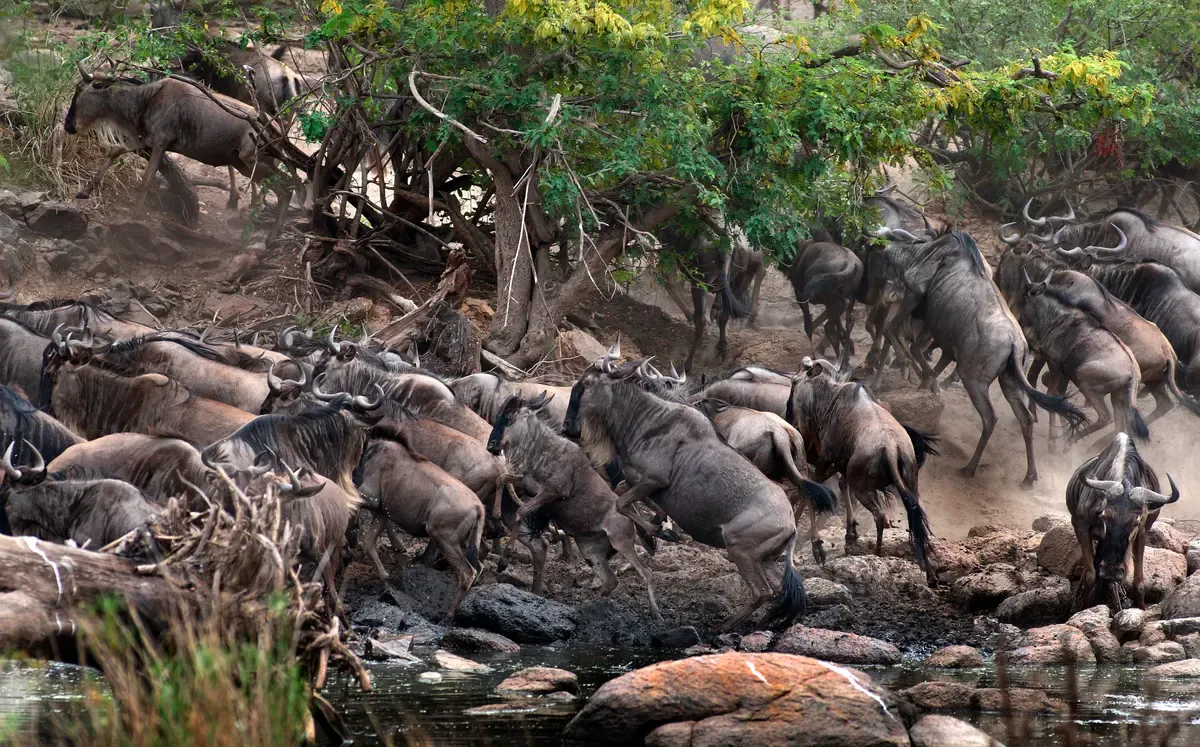
River crossings in the north are most likely between July and October. Photo: Wolves201, CC BY-SA 4.0, via Wikimedia Commons
When Is the Calving Season?
Calving runs on the Ndutu plains from late December to April, and NCAA names late February and March as the best time in the Ngorongoro area.
Calving is the other main reason to time a safari around the herds.
Ndutu and the Southern Plains
NCAA describes Ndutu as a calving ground for the wildebeest migration where thousands of calves are born each season. It recommends visiting the Ndutu plains from late December to April, when the herds arrive and then move north again.
The newborns draw predators, which is why NCAA calls late February and March the best time to see the wildebeest migration in the Ngorongoro area.
The Kusini airstrip serves the south of the Serengeti. A fly-in trip such as the 3-Day Serengeti and Ngorongoro Fly-In Safari from Zanzibar starts from Zanzibar, so ask the operator which airstrip it uses and what the price covers.
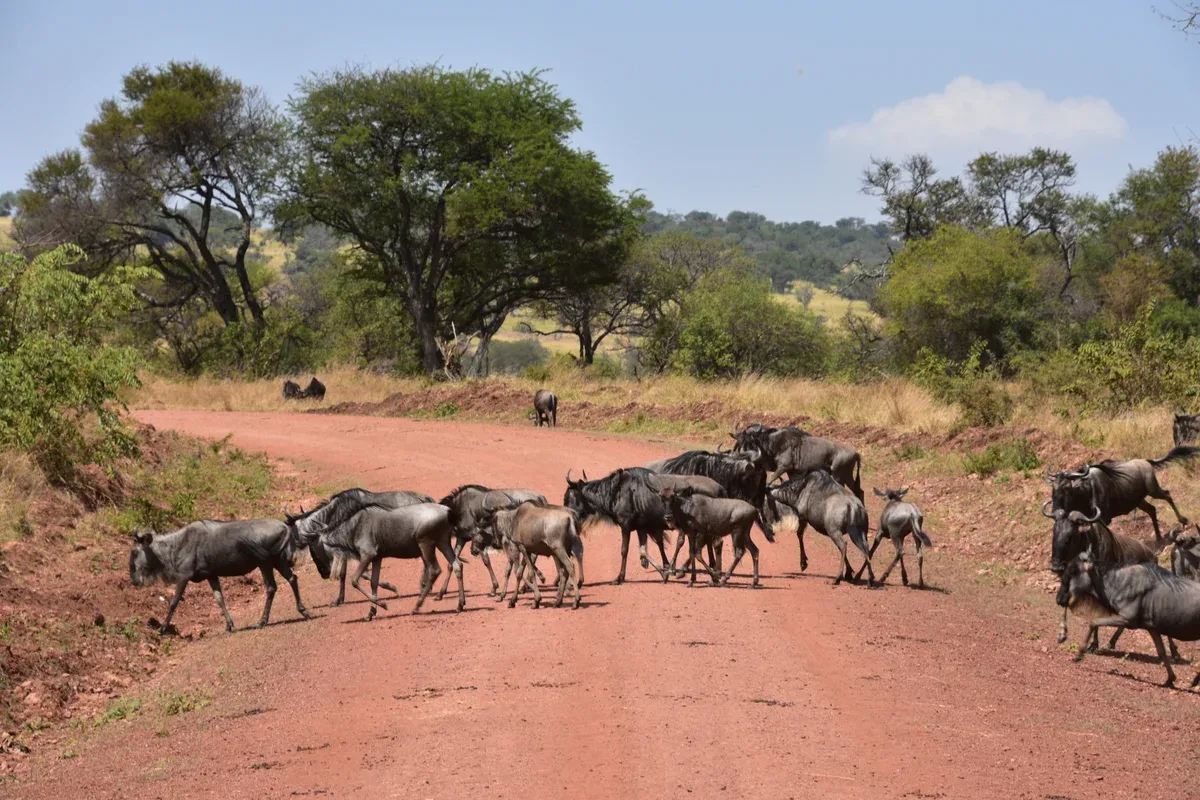
Expect to stop for herds on the road, since animals always have the right of way. Photo: Richard Mortel from Riyadh, Saudi Arabia, CC BY 2.0, via Wikimedia Commons
Where Is the Best Place to See the Great Migration in Africa?
Southern Serengeti and Ndutu suit calving, and the Mara River in northern Serengeti suits the river crossings in the dry months.
The best place changes with the month, so match the area to the phase.
Mara River Crossings in the North
River crossings happen in the dry months, when the herds reach the Mara River in the northern Serengeti. The timing moves from year to year, so a trip built around crossings needs several days in the north.
TANAPA lists the Kogatende and Lamai airstrips in the north, used by scheduled and charter flights. Ballooning in Serengeti is possible in the north, south and centre of the park. The Serengeti Balloon Safari with Bush Breakfast is $599 per person and lasts about 5 hours.
Do You Need Kenya for the Crossings?
The Mara River crossings can be watched from northern Serengeti on the Tanzanian side, so a Kenya border trip is not needed for them. If you do cross into Kenya, Kenya's official eTA site says the fee starts at USD 30.00 for normal processing. The Tanzania safari plans here stay in Tanzania, starting from the safari in Tanzania and Zanzibar homepage.
Where the Great Migration Moves in Tanzania
The herds use the whole Serengeti ecosystem: the southern plains around Ndutu, the central Serengeti at Seronera and the north at Kogatende and the Mara River, which continues into Kenya's Maasai Mara.
- 1 NdutuThe southern plains where the NCAA places the calving season.
- 2 Serengeti (Seronera)14,763 sq km in the centre of the park.
- 3 Kogatende and the Mara RiverThe northern Serengeti on the Kenyan border.
- 4 Maasai Mara (Kenya)Kenya's side of the same ecosystem.
- 5 Ngorongoro CraterRun by the NCAA, next to the Serengeti.
- 6 ArushaStart of the road safaris to the north.
Numbers match the pins on the map.
Source: Tanzania National Parks.
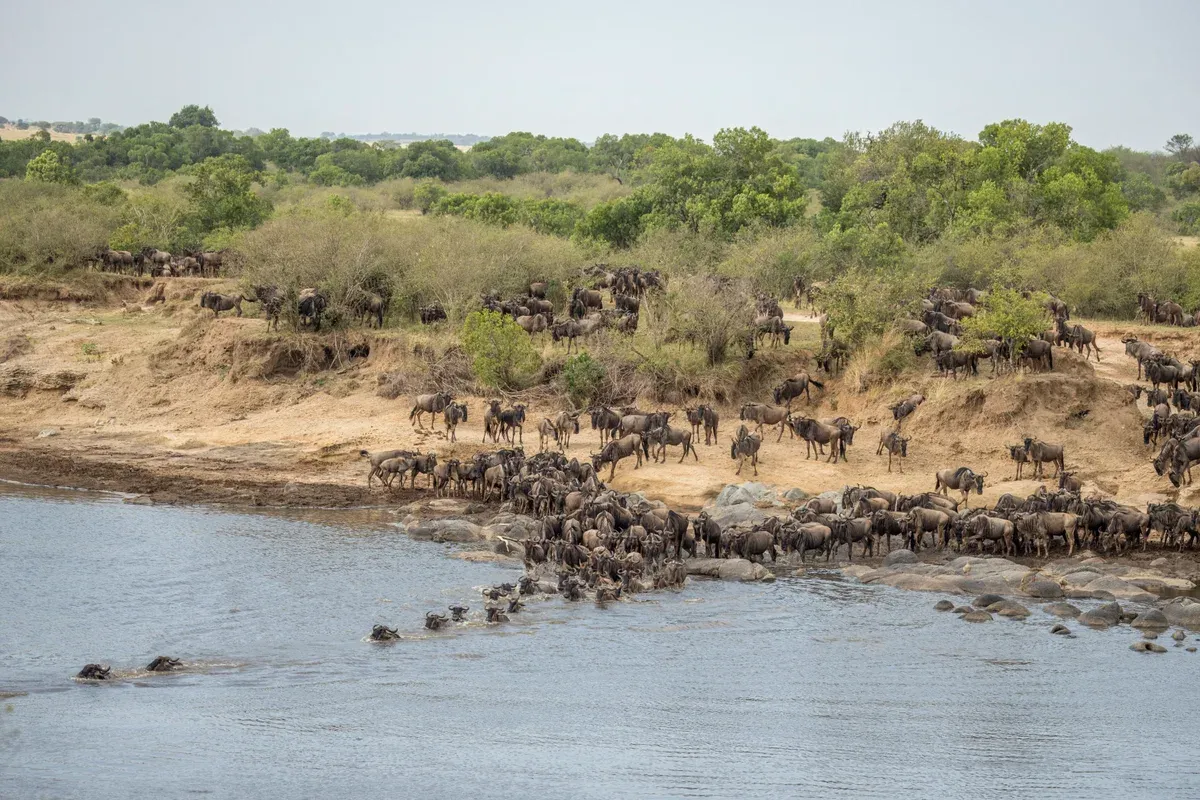
The Mara River on the Tanzanian side is the stage for the famous crossings. Photo: Charles J. Sharp, CC BY-SA 4.0, via Wikimedia Commons
Why Does the Great Migration Happen?
The herds follow the rain and the new grass through the Serengeti.
Rain decides where the herds stand in any month, so the dates move from year to year.
Rain and Grass
The migration is a continuous, year-round journey, and its rhythm is dictated by the rains. The herds follow the rain and the new grass, so the dates move from year to year.
Because the rains have become unpredictable, treat every month in the table as a guideline. Book a trip with several days in the park, and ask the operator how it adjusts the route when the herds move early or late. The shortest tours here, such as the Serengeti Balloon Safari with Bush Breakfast, last about 5 hours and show one slice of the plains.
- Calving: late December to April on the Ndutu plains
- Crossings: the dry months in the north
- After April: the herds move north again
Source: TANAPA.
How Big Is the Great Migration?
TANAPA counts over 1 million wildebeest migrating through Serengeti, with about 300,000 zebra living in the park.
The numbers show how large the herds are.
Herds and Zebra
TANAPA says over 1 million wildebeest migrate through Serengeti, with about 1.3 million wildebeest and some 300,000 zebra living in the park.
Predators follow the herds, which is why the calving grounds draw so many.
For planning, the numbers matter less than the timing. A large herd can still be on the other side of a ridge, so the best plan is to book time on the ground, not a single date.
| Figure | What it measures |
|---|---|
| Over 1 million | Wildebeest that migrate through Serengeti, says TANAPA |
| About 1.3 million | Wildebeest living in the park, says TANAPA |
| About 300,000 | Zebra living in the park, says TANAPA |
Source: TANAPA.
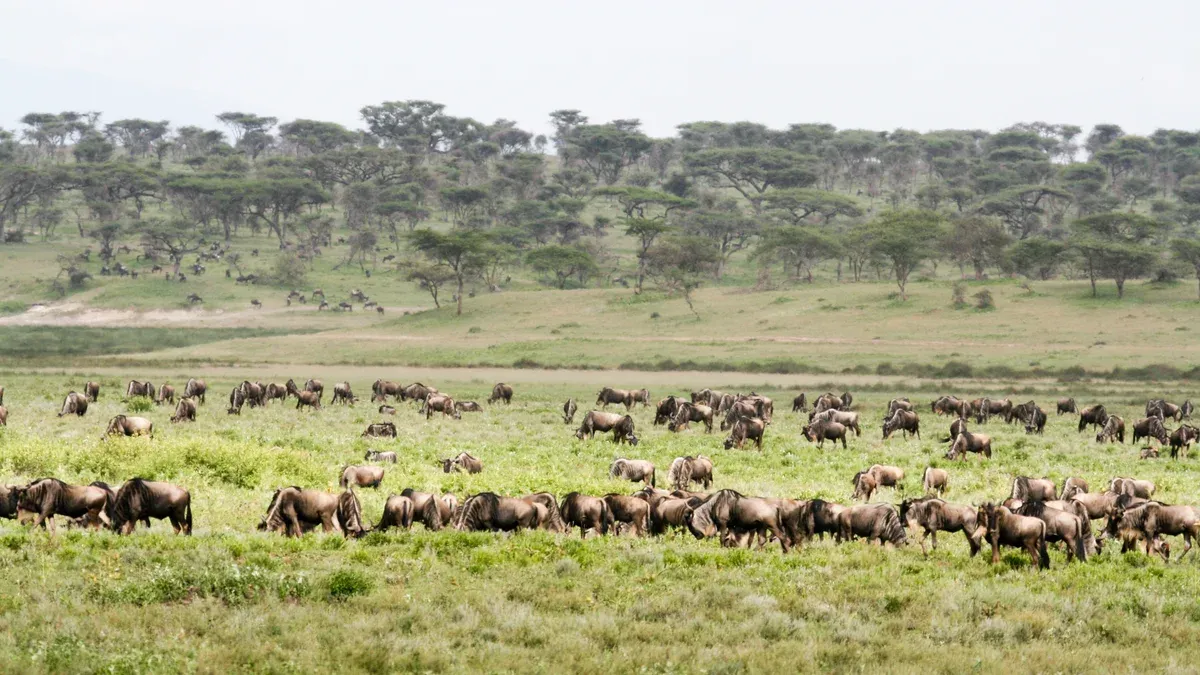
The Ndutu area hosts the herds during calving season in the early months of the year. Photo: Christoph Strässler from Oberdorf BL, Schweiz, CC BY-SA 2.0, via Wikimedia Commons
Can You See the Migration Year-Round?
Yes, the herds are always somewhere in the Serengeti, but no month guarantees a particular scene.
Because the migration never truly stops, you cannot go badly wrong, but you can go in the wrong phase.
Pick the Phase and Build in Margin
The short answer is year-round. The herds are always somewhere in the Serengeti-Mara ecosystem, so there is no off period. The real choice is the phase: calving on the Ndutu plains from late December to April or river crossings in the north in the dry months.
TANAPA calls Serengeti a year-round destination with access to all parts throughout the year. All-weather airstrips at Seronera (centre), Kusini (south), Lobo (east), Kirawira (west) and Kogatende and Lamai (north) are used by scheduled and charter flights.
A multi-day trip such as the 9-Day Tanzania Safari and Zanzibar Beach Tour at $6,158 gives more days to find the herds than a day trip.
Source: TANAPA.
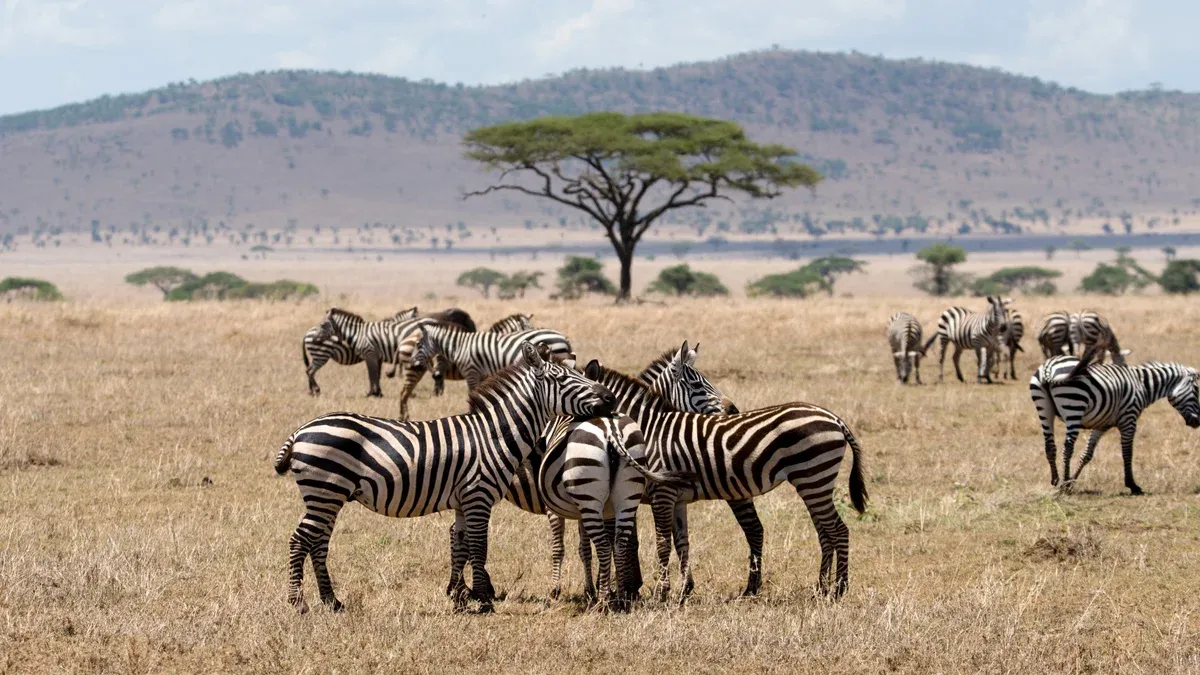
Seronera in the central Serengeti is a reliable base outside the main migration months. Photo: Christoph Strässler, CC BY-SA 2.0, via Wikimedia Commons
Tours That Fit
Combine the Serengeti with a Zanzibar beach stay.
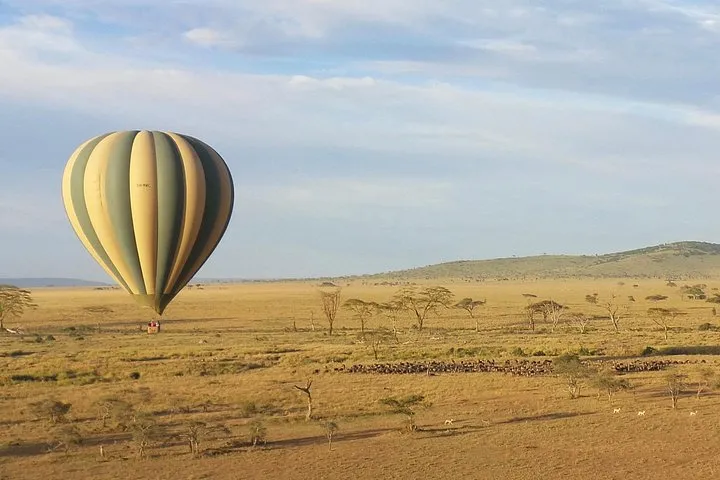 from $599
Most reviewed
Serengeti Balloon Safari with Bush Breakfast
The original Serengeti balloon flight at sunrise with a bush breakfast after landing, booked as an add-on to a Serengeti safari.
Check Availability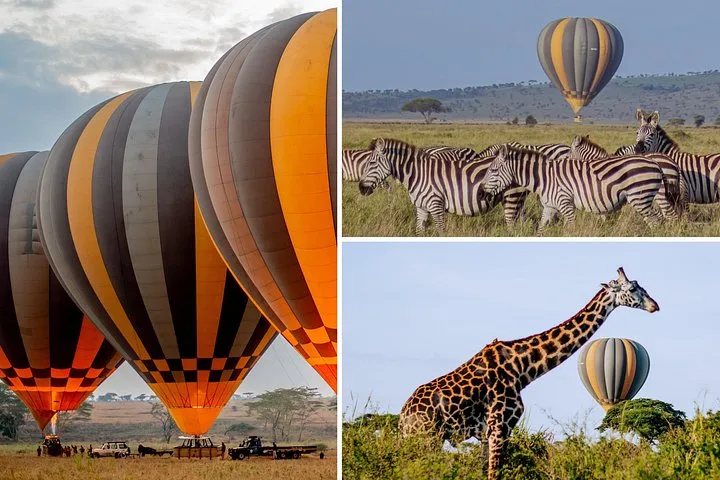 from $599
Weight limit 120 kg
Serengeti Balloon Safari and Bush Breakfast (Miracle Experience)
A sunrise balloon flight over the Serengeti with breakfast, for travellers up to 120 kg.
Check Availability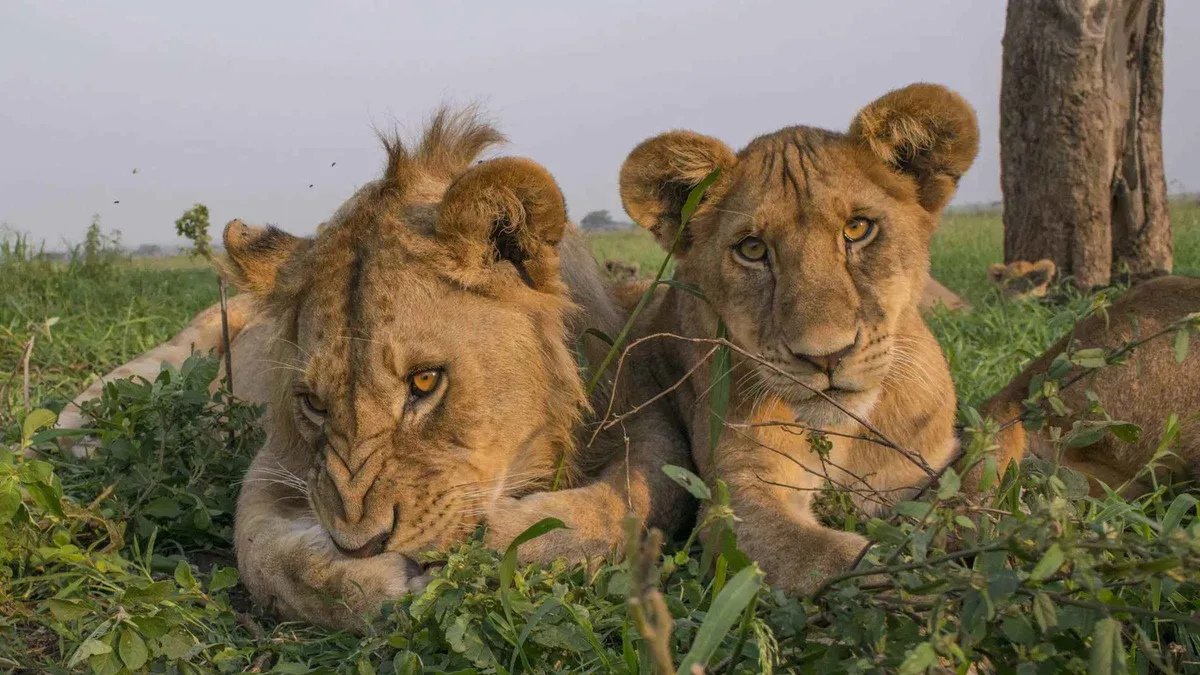 from $6,158
9 days
9-Day Tanzania Safari and Zanzibar Beach Tour
Nine days that join Tarangire, the Serengeti and the crater to Stone Town and two beach nights in Nungwi, lodges named.
Check Availability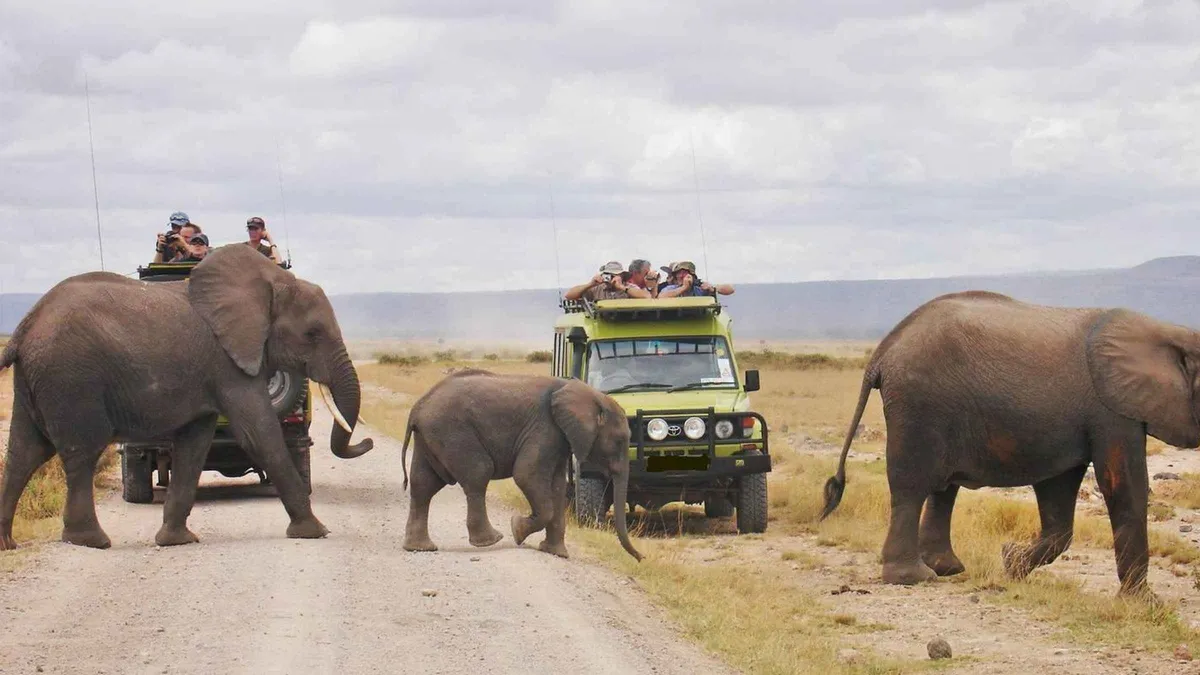 from $7,371
10 days
10-Day Tanzania Safari and Zanzibar Beach Holiday
Ten days of northern-park safari and Zanzibar beach with park fees and the Zanzibar travel insurance fee in the price.
Check AvailabilityHow Do You Plan a Migration Safari From Zanzibar?
Choose the phase first, then choose a trip by what the price covers and how you reach the Serengeti.
A migration trip from Zanzibar is decided by the airstrip and by what the operator includes.
What to Ask Before You Book
A fly-in trip includes flights, while multi-day packages differ. The listed Serengeti balloon trip by Miracle Experience Balloon Safaris notes a park entrance fee if you stay at a camp or lodge outside the National Park. The 12-day private holiday from Savannah Explorers lists all sales final and a Zanzibar Infrastructure Tax paid directly to the Zanzibar hotel.
The table compares the trips that include the Serengeti or a Zanzibar beach stay.
| Trip | Price | Duration | Operator |
|---|---|---|---|
| Serengeti Balloon Safari with Bush Breakfast | $599 | About 5 hours | Serengeti Balloon Safaris |
| Serengeti Balloon Safari and Bush Breakfast (Miracle Experience) | $599 | About 5 hours | Miracle Experience Balloon Safaris |
| 9-Day Tanzania Safari and Zanzibar Beach Tour | $6,158 | 9 days | Velam Tours & Safaris |
| 10-Day Tanzania Safari and Zanzibar Beach Holiday | $7,371 | 10 days | Velam Tours & Safaris |
| 12-Day Private Tanzania Safari and Zanzibar Beach Holiday | $6,500 | 12 days | Savannah Explorers |
Source: TANAPA.
Great Migration Tanzania FAQ
Which month is the Great Migration in Tanzania?
It runs all year. Calving is late December to April on the Ndutu plains and river crossings are in the dry months in the north. See the Serengeti balloon safari to view the plains.
Is Kenya or Tanzania better for Great Migration?
The herds cross between both. The Tanzanian side has the calving in the south and the Mara River crossings in the north, and a Kenya visit adds an eTA with a fee from USD 30.00. Start with the safari in Tanzania and Zanzibar trips.
Where is the best place to see the Great Migration in Africa?
Southern Serengeti and Ndutu for calving from late December to April, northern Serengeti for crossings in the dry months. The 3-Day Serengeti and Ngorongoro Fly-In Safari from Zanzibar reaches the Serengeti by air.
How many wildebeest died during the Great Migration?
The park bodies give the herd sizes, over 1 million wildebeest through Serengeti, but no loss figure to rely on. Crossings are risky for the animals, so give yourself several days in the park. See safari in Tanzania and Zanzibar.
Why does the Great Migration happen?
The herds follow rain and new grass. Rainfall dictates the rhythm, so dates shift year to year. Pair the migration with a beach stay on the 10-Day Tanzania Safari and Zanzibar Beach Holiday.
Can I see the migration year-round?
Yes, the herds are always somewhere in the Serengeti. TANAPA says over 1 million wildebeest migrate through Serengeti. A Serengeti balloon safari gives an aerial view of the plains.
More Guides
- Serengeti Tours: 3 to 5 Day Safaris from Arusha or a Fly-In from Zanzibar
Serengeti tours in 2027: 3 to 5 day safaris by road from Arusha or a fly-in from Zanzibar, from $900. Compare tours.
- Serengeti Balloon Safari: Sunrise Flights, Bush Breakfast and What the Price Covers
A Serengeti balloon safari in 2027: a sunrise flight of 50 to 70 minutes and a bush breakfast, $599 per person. Check dates.
- Tanzania Safari Package with a Zanzibar Beach Stay: 9 to 12 Days Compared
Tanzania safari packages in 2027: 9 to 12 days with a Zanzibar beach stay, from $6,158 per person. Compare tours.